
Bulletin
Ablative vs Non-Ablative Lasers
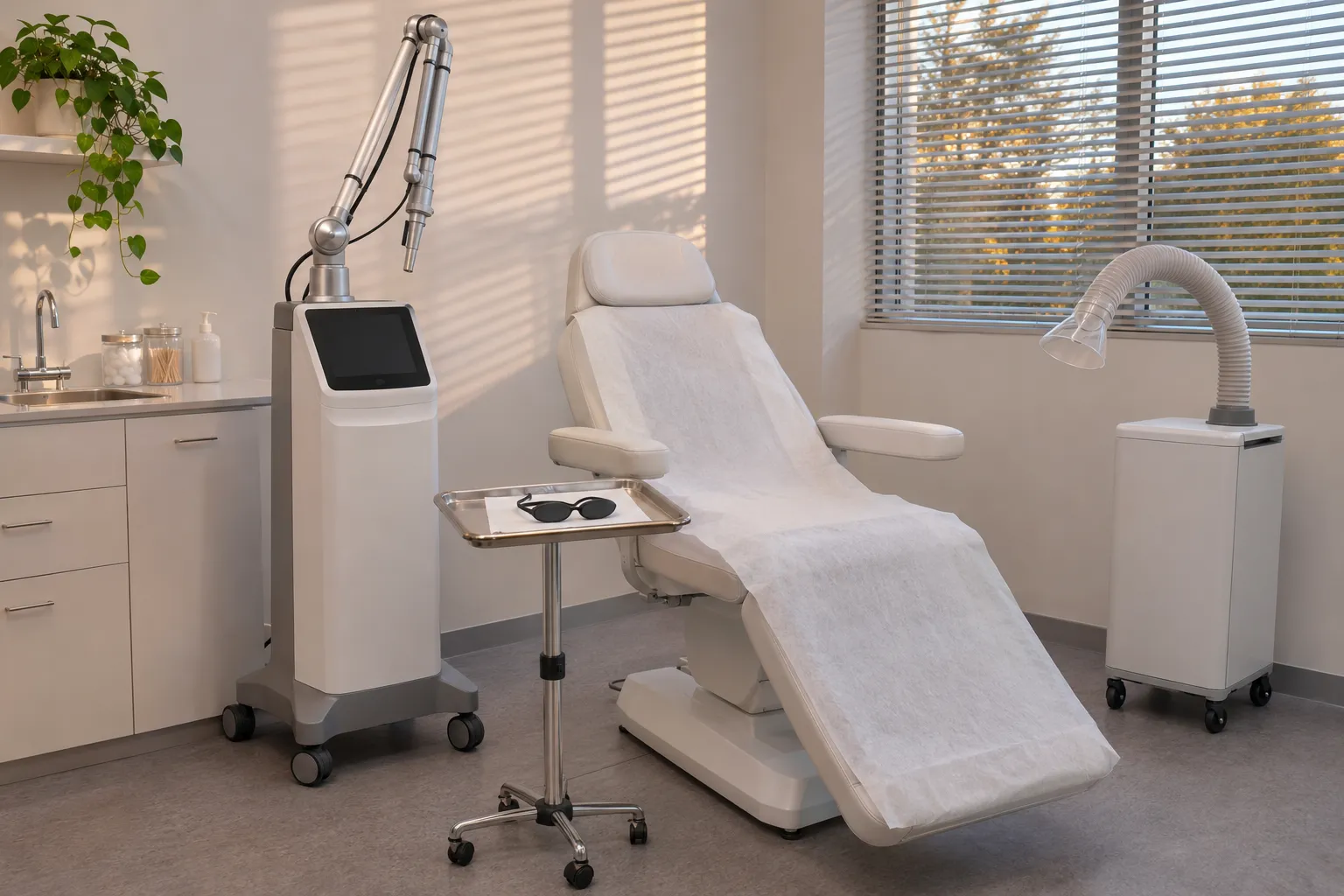
The words ablative and non-ablative decide a great deal about a laser consultation. This page reads what published sources say, so Stamford readers can ask sharper questions.
The goal is a clear standard to measure a proposal against. The sections below cover how the American Society for Dermatologic Surgery describes non-ablative lasers, where to read about the other type, and what to ask.
How non-ablative lasers are described
The American Society for Dermatologic Surgery writes: "Nonablative lasers often are fractionated so they deliver heat into the skin through thousands of tiny, deep columns known as microthermal treatment zones with intervening normal untreated skin." The society explains the approach on its non-ablative laser rejuvenation page.
In plain terms, the sentence describes a fractionated pattern with untreated skin left between the treated columns.
Reading about the other type
For the comparison, read the society's laser resurfacing page alongside it. A clinical page on carbon dioxide laser resurfacing also shows how one specific laser is presented.
A checklist for your consultation
- Is the laser proposed to me ablative or non-ablative?
- Is it fractionated, and who has published guidance on that type?
- What does my provider expect the recovery to look like for my skin?
Choosing between them
A proposal that names the laser type and points to published guidance meets the standard. One that does not name the type leaves you to guess. A licensed provider who has examined your skin is the person who confirms which type fits you. The American Society of Plastic Surgeons laser skin resurfacing page is a third published reference to read first.